Schuman.info

The Schuman Project (found at schuman.info) is an independent research initiative directed by historian David Heilbron Price. It is arguably the most detailed resource available for anyone looking to understand the “Institutional Gap” we are exploring.

The project acts as a “intellectual watchdog,” arguing that the modern European Union has effectively “hijacked” or “counterfeited” Robert Schuman’s original democratic design.

Beow a synopsis of the analysis on Schuman.info:

1. The “Supranational” vs. “Federal” Distinction

The project emphasizes a distinction that is often lost in modern politics: Schuman did not want a Federal Europe (a United States of Europe) or an Intergovernmental Europe (a club of governments).

  • Schuman’s Vision: A “Supranational Community” where power is delegated by the people to independent bodies that are strictly held accountable by a House of the People.
  • The Project’s Critique: It argues the current EU is a “technocratic cartel” where unelected officials and heads of state make deals behind closed doors, which is the exact opposite of what Schuman proposed in 1950.

2. The “Great Charter” and Hidden History

One of the most unique aspects of the Schuman Project is its focus on the 1951 Charter of the Community. Price argues that the EU has “forgotten” or “hidden” its own founding democratic principles.

  • The project highlights that Schuman’s original plan required direct elections and public transparency as a prerequisite for any power transfer.
  • It accuses modern EU leaders of “legal forgery”—passing treaties like the Lisbon Treaty which, according to the project, are “undemocratic, even anti-democratic” because they bypass the direct consent of the people (referendums).

3. The “Democratic Deficit” as a “Democratic Deceit”

While mainstream media calls it a “deficit,” the Schuman Project labels it a “Deceit.” * It provides evidence that the European Commission has moved away from being a “technical servant” of the nations (as Schuman intended) to becoming a political body that lacks the moral authority Schuman believed was necessary.

  • It specifically critiques the Council of Ministers for acting as a “secretive legislature,” which Schuman warned would lead to the very nationalism and distrust we see today.

4. Key “Schuman Project” Resources for Research:

These are the strongest sections:

  • “The Warning of Political Counterfeiters”: Based on Schuman’s 1963 warnings that politicians would try to strip the “soul” out of the community and replace it with a cold bureaucracy.
  • “Schuman vs. Monnet”: The project argues that Jean Monnet (the technocrat) has been unfairly credited at the expense of Schuman (the democrat), leading to an EU that prioritizes efficiency over human rights and democracy.
  • “The Five Key Institutions”: A breakdown of how Schuman’s original 5-pillar system was designed to prevent the centralisation of power we see today. See https://www.schuman.info/supra5.htm
Posted in Uncategorized | Leave a comment

References

I. Primary Sources: Schuman’s Writings & Speeches

  • Schuman, Robert. Pour l’Europe (For Europe).
    • First published in 1963. This is Schuman’s “political testament.” It details his belief that democracy is a Christian development and argues for a supranationalism that preserves national identity rather than erasing it.
  • The Schuman Declaration (9 May 1950).
    • French Ministry of Foreign Affairs (Quai d’Orsay). The foundational document of the European project. It contains the famous “de facto solidarity” and “Europe will not be made all at once” quotes.
  • Schuman, Robert. Speech to the European Parliamentary Assembly (19 March 1958).
    • In his inaugural speech as the first President of the Assembly, Schuman outlines the role of the parliament as the moral and democratic supervisor of the European executive.
  • Speech by Robert Schuman at the Council of Europe (Strasbourg, 10 December 1951).
    • A critical primary source where Schuman explains that European integration is not about power, but about “peace through the equality of nations.”

    II. Institutional & Legal Documents

    • The Treaty of Lisbon (2007/2009).
      • Official Journal of the European Union. This treaty introduced the “Yellow Card” mechanism (Protocol No. 2) meant to allow national parliaments to check EU overreach—a key point in your “Democratic Deficit” argument.
    • The Treaty of Paris (1951).
      • The founding document of the European Coal and Steel Community (ECSC). It outlines the powers of the original “High Authority,” which was significantly more independent and sector-specific than the modern Commission.
    • European Commission Annual Reports on Subsidiarity and Proportionality.
      • Specifically, see reports from 2013 (EPPO case) and 2016 (Posted Workers case) to verify the rejection of national parliamentary objections.

      III. Academic & Scholarly Analysis

      • Majone, Giandomenico. Europe as the Regulatory State.
        • A seminal work on how the EU evolved into a “technocracy.” Majone argues that the EU’s legitimacy comes from its efficiency and expertise rather than direct democratic participation—a contrast to Schuman’s “people-first” model.
      • Moravcsik, Andrew. “In Defense of the ‘Democratic Deficit’: Reassessing Legitimacy in the European Union.”
        • A famous academic paper that argues the “deficit” is intentional and beneficial, providing a strong counter-point to Schuman’s vision of a more transparent, public-led union.
        • Fountain, Jeff. The Forgotten Vision of Robert Schuman.
          • Schuman Centre for European Studies (2010). This analysis focuses specifically on the Christian Humanist roots of Schuman’s vision and how they have been replaced by secular technocracy.

          IV. Digital Archives & Research Tools

          • CVCE (Centre Virtuel de la Connaissance sur l’Europe):
            • An excellent digital library hosted by the University of Luxembourg. Search for “Robert Schuman” to find original letters, draft declarations, and audio-visual recordings of his speeches.
          • The Robert Schuman Foundation (Fondation Robert Schuman):
            • A research center that publishes regular “Schuman Papers” analyzing modern EU policy through the lens of Schuman’s original principles.
          • The Schuman Project (schuman.info)

            • The Schuman Project is an independent research initiative directed by historian David Heilbron Price. It is arguably the most detailed resource available for anyone looking to understand the “Institutional Gap” we have been exploring. The project acts as a “intellectual watchdog,” arguing that the modern European Union has effectively “hijacked” or “counterfeited” Robert Schuman’s original democratic design.

Posted in Uncategorized | Leave a comment

What is this all about?

Welcome to the website of the Schuman2030 project.

Our objective is simple, yet ambitious and necessary.

Europe today needs to make a step forward, and when we say Europe we really mean the European Union (the EU). The EU has been built in slow steps by way of treaties since the end of the second World War. The goals were to strengthen the European identity by first creating tighter economic links and today even more political links.

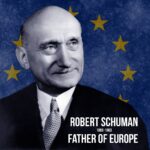
Robert Schuman (1886–1963) was a French statesman and one of the principal architects of European integration after World War II. His most significant contribution was the Schuman Declaration of May 9, 1950, in which he proposed placing French and German coal and steel production under a common High Authority — open to other European countries. This initiative aimed to make war between historic rivals France and Germany “not merely unthinkable, but materially impossible.”

This proposal directly led to the creation of the European Coal and Steel Community (ECSC) via the Treaty of Paris (1951) — the first step toward today’s European Union.

Schuman is often called the “father of Europe” for his vision of supranational cooperation as a path to peace and prosperity. It should be noted that the aim was cooperation, not creating a supranational authority.

After the Treaty of Lisbon, the EU needs to take a new step. In honor of Robert Schuman, we called it the Schuman2030 project.

Today, we must admit that the de jure situation is quite different from the de facto situation. There is a lack of democracy with citizens’ participation and there is an overreach by the EU Commission. An overreach that translates itself in EU Directives often covering micro-level issues and complex bureaucratic regulations. 80% of the member states’ laws are an implementation of these directives. We need to reduce these bureaucratic regulations as they strangle Europe’s economic fabric. Competences need to go back to the member states and the local level.

At the same time, it is clear that the EU is increasingly confronted with world-wide challenges: geo-political, economic, pandemics and recently war at our borders whereby Europe is squeezed between superpowers. The EU is here largely operating without a clear legal base and without democratic control. At the same time, we must acknowledge that there is a lack of a long term vision.

Project Schuman2030 aims a follow-up treaty of Lisbon addressing the challenges. We look outside and get our inspiration from successful practices elsewhere.

1. Bottom-up subsidiarity of competences

Inspired by the direct democracy framework of Switzerland, competences are delegated to their most appropriate level, following the rule:
Decisions at lowest level possible unless EU-wide action is necessary.

2. Increased participation of citizens and the European Parliament in the decisions. Citizen’s Initiatives and binding referenda for important matters.

3. Reinforcing the supra-national and cross border competences

On the world-wide scene the EU must be able to act as a strong and resilient block and have the infrastructure as well as command structure to enable this.

4. Long term planning and supervision

In a world that is changing fast and technology is disrupting economic immobility, Europe must look decades ahead not driven by ideology or political opportunism but by a solid insight in what the future can bring and how to anticipate it.

Note:

The EU and its treaties are now a complex, rigid and bureaucratic matter. The proposed changes will greatly simplify the framework and reintroduce the flexibility that each member state needs to fully develop. At the same, the EU leadership will be able to focus on these issues that concern all member states and for which the EU brings a bonus. Keep following project Schuman2030. This is Work In Progress.

Posted in Uncategorized | Leave a comment